
Solar PV Ltd
Here at Solar PV Ltd, we are specialists at designing and installing Solar panel, battery storage and EV charger systems. We also offer solar PV system maintenance and protection.
As a business run by both directors being Electrical engineers, we pride ourselves on our exceptional customer service and craftsmanship.
We install Solar Systems across the entire UK and have direct links to Napit, HIES and MCS.
Solar PV Ltd. is a forward-looking renewable energy installer offering professional services for both domestic and commercial property owners.
We pride ourselves on building long-standing relationships with our customers and contractors and work hard to maintain our reputation as a leading installer across East Anglia, East Midlands and South East England.
As both company directors come from an Electrical engineering background, we pride ourselves on our exceptional system installation quality and product knowledge.
With our office-based design team dedicated to each customer, we can offer a personal service for the installation of Solar panels, battery storage and EV charger systems. Along with on-going customer service, system maintenance and protection.
We are fully accredited PV installer and have direct links to NAPIT, HIES and MCS. Not to mention being ‘preferred installers’ for many Solar and Battery storage brands (please ask on our enquiry form section for brand information).
Solar PV Ltd. are fully committed to a greener future, assisting in energy consumption and carbon footprint reduction to help achieve the UK’s net zero targets.
Get informed from our clients previous installations.


Our company installs solar panels to help you produce your own electricity.
Solar PV Ltd is specializes in solar PV with Batteries installation.
Professional solar panel maintenance for sustainable energy efficiency.
Sustainable, reliable & affordable energy systems, Find your solution now!
Get informed about the installation process for our solar panels.
In depth technical solar survey carried out by a professional solar qualified engineer.
Detailed design and specification of the solar system suited to your needs.
Scaffolding erected (if required) at a time and date agreeable with yourselves.
Installation (usually completed within 1-2 days) site permitting. All testing and commissioning. Monitoring platform built. Start generating electricity.
Once you are happy with the installation the scaffolding will be arranged to be struck.
- MCS
- Electrical certificate
- Building control notification
- Insurance backed by 'HIES'
- DNO notification (if required)
By generating your own electricity with solar panels, you can become less reliant on the grid and protect yourself against power outages and other disruptions.
Solar energy is a clean and renewable source of power, which means that it produces no greenhouse gas emissions and helps reduce our reliance on fossil fuels.
Solar panels can significantly reduce your monthly electricity bill and even eliminate it entirely, depending on your energy usage and the size of your solar system.
Installing solar panels can increase the value of your home, making it more attractive to potential buyers if you ever decide to sell.
Most frequent questions and answers.
Solar PV is a way to generate electricity using sunlight. Solar PV cells are made of special materials that create an electric field when exposed to sunlight. The electric field then causes electrons to flow, creating an electric current. This current can be used to power electrical devices.
Solar PV is a type of renewable energy. Solar PV panels are placed on the rooftop of a house or building. They capture sunlight and convert it into electricity. Solar PV is a clean and environmentally friendly source of energy. It does not produce air pollution or greenhouse gases. Solar PV is also a quiet source of energy.
A solar battery is a device that stores energy from the sun in order to use it later. Just like a regular battery, a solar battery can be used to power things like lights and computers. However, unlike a regular battery, a solar battery is powered by the sun instead of by electricity.
A solar PV system is a system that uses solar panels to convert sunlight into electricity. Solar PV systems can range in cost from £4,000 to £40,000, depending on the size and type of system.
No, you will still own your roof. Solar panels are just a way to collect energy from the sun and turn it into electricity. It’s like putting a solar powered battery on your roof.
It typically takes about 5-8 years to see a return on your solar photovoltaic (PV) investment, depending on the size of your system, how much electricity you use, the amount of sunlight your home gets.
Solar panels are a great way to save money and energy. They work by converting sunlight into electricity, which can then be used to power your home. Many people use solar panels with their existing boiler in order to save even more money.
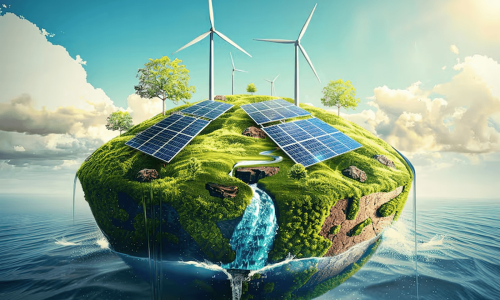
Building and producing renewable energy sources provide numerous benefits, including environmental sustainability, energy independence, economic growth, improved public health, and resource preservation, ultimately leading to a cleaner, healthier, and more sustainable world.
If you need to get in touch with us, you can do so easily by filling out this contact form. We’ll get back to you as soon as possible so that you can get the help you need.
By filling out this contact form one of our system designers will get back to you immediately to create your FREE solar proposal.
The proposal will give you a preliminary design with recommendations and payback from your own personal assistant throughout the process.
From here you can arrange a FREE technical site survey and receive advice regarding network approval applications.
Lichfield is a cathedral city and civil parish in Staffordshire, England. Lichfield is situated 18 miles (29 km) south-east of the county town of Stafford, 9 miles (14 km) north-east of Walsall, 8 miles (13 km) north-west of Tamworth and 13 miles (21 km) south-west of Burton upon Trent. At the time of the 2021 Census, the population was 34,738 and the population of the wider Lichfield District was 106,400.
Notable for its three-spired medieval cathedral, Lichfield was the birthplace of Samuel Johnson, the writer of the first authoritative Dictionary of the English Language. The city’s recorded history began when Chad of Mercia arrived to establish his Bishopric in 669 AD and the settlement grew as the ecclesiastical centre of Mercia. In 2009, the Staffordshire Hoard, the largest hoard of Anglo-Saxon gold and silver metalwork, was found 4 mi (6.4 km) south-west of Lichfield.
The earliest evidence of settlement is Mesolithic flints discovered on the high ground of the cemetery at St Michael on Greenhill, which may indicate an early flint industry. Traces of Neolithic settlement have been discovered on the south side of the sandstone ridge occupied by Lichfield Cathedral.
2.2 mi (3.5 km) south-west of Lichfield, near the point where Icknield Street crosses Watling Street, was the site of Letocetum (the Brittonic *Lētocaiton, “Greywood”). Established in AD 50 as a Roman military fortress, it had become a civilian settlement (vicus) with a bath house and a mansio by the 2nd century. Letocetum fell into decline by the 4th century and the Romans had left by the 5th century. There have been scattered Romano-British finds in Lichfield and it is possible that a burial discovered beneath the cathedral in 1751 was Romano-British. There is no evidence of what happened to Letocetum after the Romans left; however, Lichfield may have emerged as the inhabitants of Letocetum relocated during its decline. A Cair Luit Coyd (“Fort Greywood”) was listed by Nennius among the 28 cities of Britain in his Historia Brittonum, although these were largely historic remembrances of early Sub-Roman Britain.
Solar panels are becoming an increasingly popular choice for homeowners and businesses across the UK. With rising interest in renewable energy, improved …
The UK’s transition towards renewable energy is creating new opportunities for sustainable electricity generation. However, producing clean electricity is only one part …
Solar energy is becoming an increasingly important part of the UK’s transition towards cleaner, more sustainable electricity. As the demand for renewable …