





The UK’s transition towards cleaner energy is changing the way electricity is generated, stored and supplied. With increasing amounts of electricity coming from renewable sources such as wind and solar, the country needs a smarter and more flexible energy system that can respond to changing levels of generation and demand.
This is where Battery Energy Storage Systems (BESS) are becoming increasingly important.
Battery storage provides a way to capture electricity when it is available in abundance and release it when it is needed most. By helping balance supply and demand, battery energy storage can support renewable energy, improve grid flexibility and contribute to the UK’s long-term clean energy ambitions.
What Is a Battery Energy Storage System?
A Battery Energy Storage System is designed to store electrical energy for use at a later time.
Rather than generating electricity itself, a battery system stores electricity from the grid or renewable sources before releasing it when required.
For example, periods of strong wind or sunshine can result in renewable energy generation exceeding immediate demand. A battery storage facility can absorb some of this surplus electricity rather than allowing it to go unused.
When electricity demand increases or renewable generation falls, the stored energy can then be discharged back into the grid.
This simple but highly responsive process makes grid-scale battery storage an important technology for the UK’s evolving electricity network.
Why Is Battery Storage Important for the UK?
The UK is rapidly increasing its renewable electricity capacity. Wind and solar power are central to this transition, but both are dependent on weather conditions.
Solar panels generate most of their electricity during daylight hours, while wind turbines produce different levels of electricity as wind speeds change.
Electricity demand, meanwhile, continues throughout the day.
Battery storage helps bridge this gap by providing flexibility between electricity generation and consumption.
A growing network of battery storage systems can help to:
- Store surplus renewable electricity
- Release energy when demand increases
- Improve electricity grid flexibility
- Support the integration of wind and solar power
- Reduce dependence on fossil-fuel generation
- Help manage fluctuations in electricity supply
- Improve the overall efficiency of the energy system
As the UK’s renewable generation capacity grows, this flexibility will become increasingly valuable.
How Do Battery Energy Storage Systems Work?
Battery storage systems operate by charging and discharging electricity according to grid requirements.
When electricity supply is greater than demand, batteries can charge and store the available energy.
When demand rises or electricity generation falls, the batteries can discharge that stored energy.
This can happen extremely quickly, allowing battery systems to respond to changes in the electricity network much faster than many traditional forms of generation.
Storing Renewable Energy
One of the most important applications is storing electricity generated by renewable sources.
For example, a solar farm may produce substantial amounts of electricity during the middle of the day. If demand is lower than generation at that point, the excess electricity can be stored in batteries.
Later, when the sun goes down and demand remains high, the stored electricity can be released.
The same principle can be applied to wind generation during periods when wind farms produce more electricity than the grid immediately requires.
Can Battery Storage Help Reduce Renewable Energy Waste?
Renewable electricity generation can sometimes exceed the amount of energy the grid can use at a particular moment.
Without sufficient flexibility, this can result in renewable generation being curtailed.
Energy storage provides another option.
Instead of simply reducing renewable generation during periods of excess supply, electricity can potentially be stored and used later.
This means battery storage can help the UK make better use of existing renewable infrastructure while supporting the development of additional clean energy generation.
How Quickly Can Battery Storage Projects Be Developed?
One of the advantages of battery storage is its modular nature.
Once planning, grid connection and other approvals have been secured, construction can often be completed relatively quickly compared with some other large-scale energy infrastructure projects.
However, the development process itself can take considerably longer.
Before a project can be built, developers may need to undertake:
- Site assessments
- Grid connection studies
- Planning applications
- Environmental assessments
- Noise assessments
- Ecological surveys
- Transport and access assessments
- Fire safety planning
- Landscape and visual assessments
- Community engagement
The availability of a suitable grid connection can also have a major influence on project timescales.
Planning Permission for Battery Storage in the UK
Battery energy storage projects are subject to planning and regulatory requirements across the UK.
The exact planning process can vary depending on the location, scale and characteristics of a proposed development.
Planning authorities may consider factors such as:
- Land use
- Visual impact
- Noise
- Ecology
- Traffic
- Drainage
- Landscaping
- Local environmental conditions
- Proximity to homes and other buildings
- Fire and emergency response arrangements
Planning conditions may also require measures such as fencing, screening, landscaping, controlled lighting and noise mitigation.
Selecting an appropriate location and addressing potential impacts at an early stage can therefore be essential to successful project development.
Are Battery Energy Storage Systems Safe?
Safety is a key consideration when designing and operating battery storage facilities.
Modern BESS installations incorporate multiple safety systems designed to monitor equipment, identify faults and reduce potential risks.
Many large-scale systems use lithium-ion battery technology. One potential hazard associated with lithium-ion batteries is thermal runaway, a process in which a battery cell experiences an uncontrolled increase in temperature.
However, grid-scale battery systems are engineered specifically for large-scale energy applications and can incorporate extensive protection and monitoring measures.
These may include:
- Battery management systems
- Temperature monitoring
- Smoke and fire detection
- Automatic shutdown systems
- Fire suppression equipment
- Fire-resistant enclosures
- Separation between battery units
- Emergency access arrangements
- Site monitoring
- Emergency response procedures
The precise safety measures used will depend on the technology, site design and applicable requirements.
Fire Safety and Emergency Planning
Fire safety is an important part of the planning and design process for battery energy storage projects.
Developers may work with relevant authorities and emergency services to establish appropriate emergency procedures and site-specific safety arrangements.
Battery storage facilities can be designed with physical separation between units and systems intended to detect and manage abnormal conditions.
Comprehensive safety planning can help reduce the likelihood of incidents and limit their potential impact should an incident occur.
How Is Battery Storage Regulated in the UK?
Battery storage projects operate within a wider framework of planning, electrical, environmental, health and safety requirements.
Rather than being governed by a single piece of legislation, different regulations and standards can apply to areas such as:
- Electrical safety
- Fire protection
- Planning
- Environmental management
- Workplace health and safety
- Equipment standards
- Grid connections
- Emergency response
Developers must consider these requirements throughout the project lifecycle, from initial site selection and design through to construction, operation and eventual decommissioning.
What Challenges Are Facing Battery Storage in the UK?
Although battery storage has significant potential, several challenges could affect the speed at which the sector expands.
Grid Connection Delays
Access to the electricity network is a major consideration for new energy projects.
Long connection queues and limited network capacity can delay battery storage developments and make it more difficult to bring new projects online quickly.
High Initial Costs
Developing a large battery storage facility requires considerable upfront investment.
Although battery technology has become more affordable over time, capital costs remain an important factor when assessing the viability of new projects.
Changing Energy Markets
Battery storage projects can earn revenue through different energy markets and grid services.
However, these revenue streams can change as electricity markets evolve, making long-term investment decisions more complex.
Supply Chain Pressures
Battery manufacturing relies on global supply chains and access to critical minerals.
This creates wider considerations around material availability, manufacturing capacity, responsible sourcing, recycling and long-term supply security.
Planning and Community Concerns
As with other infrastructure projects, battery developments can raise questions around appearance, noise, land use, traffic and safety.
Good site selection, transparent communication and careful project design can help address many of these concerns.
What Is Long-Duration Energy Storage?
Battery storage is often associated with short-duration applications, but the UK’s future energy system will require a range of different storage technologies.
Long-duration energy storage (LDES) is designed to store electricity for longer periods and can help manage extended periods when renewable generation is lower than demand.
This could become particularly important as the UK’s dependence on renewable electricity increases.
Different storage technologies are therefore likely to work alongside one another, creating a more flexible and resilient electricity system.
How Can Battery Storage Support Businesses?
Battery energy storage is not limited to large national grid projects.
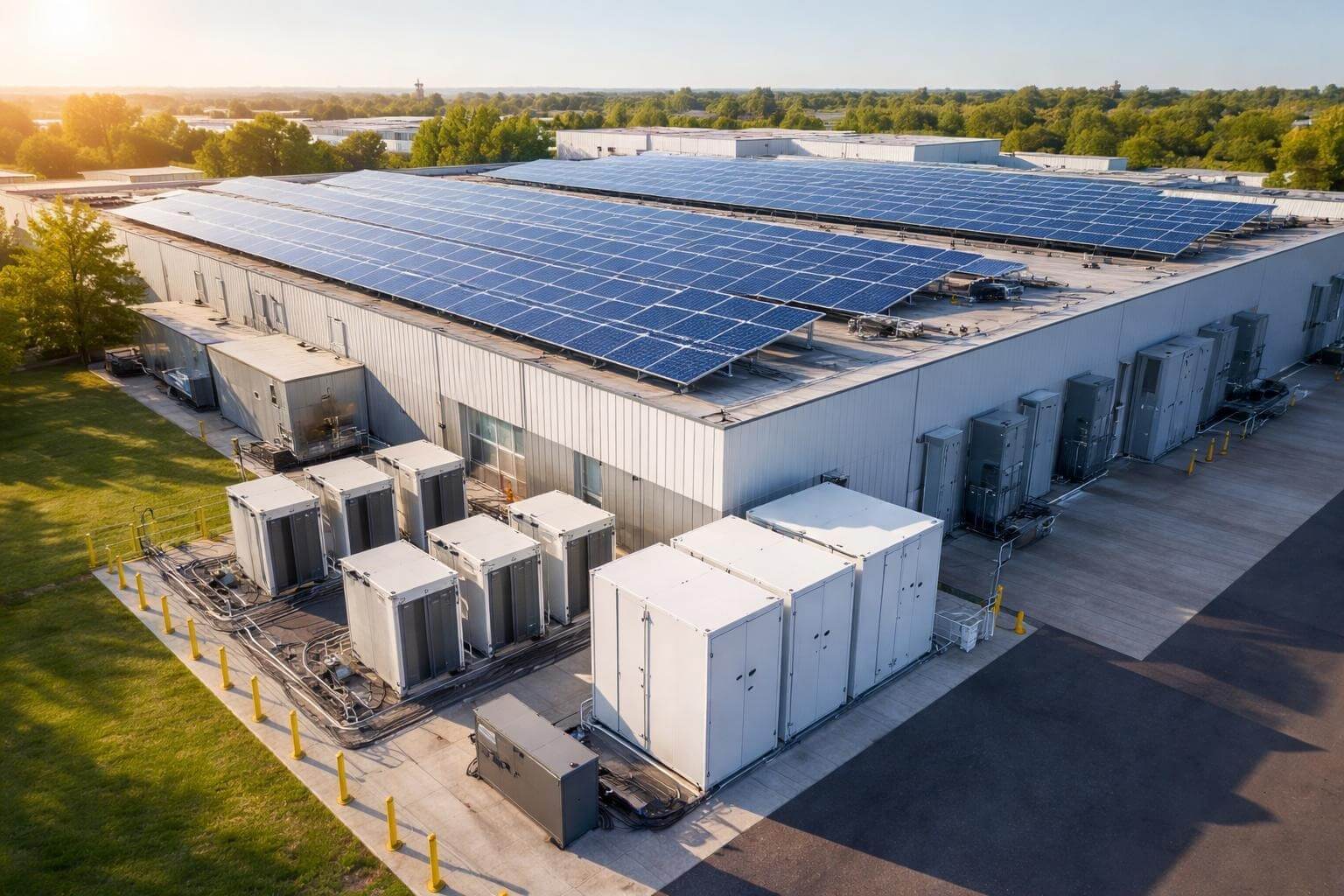
Businesses can also use battery technology as part of wider energy management strategies, particularly where they generate electricity through technologies such as commercial solar panels.
Depending on the system and its intended use, commercial battery storage can help businesses:
- Store excess solar electricity
- Improve the use of renewable energy generated on-site
- Manage periods of high electricity demand
- Improve energy resilience
- Support sustainability targets
- Potentially reduce exposure to peak electricity costs
The suitability of battery storage will depend on the individual business, its electricity consumption, available space and energy strategy.
Battery Storage and the UK’s Net Zero Ambitions
Reaching a low-carbon electricity system will require more than simply installing additional renewable generation.
The UK also needs infrastructure capable of managing when electricity is generated and when it is consumed.
Battery storage can provide this flexibility.
By rapidly storing and releasing electricity, BESS technology can help balance variable renewable generation with changing demand.
This becomes even more important as the country continues to electrify transport, heating and other areas of the economy.
What Does the Future Hold for Battery Energy Storage?
The role of battery storage in the UK is expected to continue growing as renewable energy capacity expands.
Future development is likely to be influenced by:
- Advances in battery technology
- Improvements in energy density and efficiency
- Falling technology costs
- Faster grid connections
- Investment in energy infrastructure
- Evolving electricity markets
- Improved safety standards
- Battery recycling and reuse
- Greater supply-chain resilience
Innovation could also introduce new battery chemistries and alternative energy storage technologies, giving the UK more options for balancing its future electricity system.
The Growing Importance of Battery Storage
The UK’s clean energy transition requires an electricity system that can respond to changing conditions.
Wind and solar power can provide large quantities of low-carbon electricity, but their variable nature means that flexibility is essential.
Battery Energy Storage Systems can help provide that flexibility by storing electricity when supply is high and releasing it when demand increases.
They can also support grid stability, improve the utilisation of renewable energy and provide valuable services to the electricity network.
Conclusion
Battery Energy Storage Systems are becoming an increasingly important part of the UK’s clean energy infrastructure.
As the country continues to expand renewable electricity generation, energy storage can help ensure that more of this electricity is available when it is needed.
While challenges remain around grid connections, investment, planning, safety and supply chains, continued technological development and supportive energy policies can help accelerate the deployment of battery storage across the UK.
Ultimately, battery storage is not a standalone solution to the UK’s energy challenges. Instead, it is an important part of a wider energy strategy that combines renewable generation, flexible demand, energy storage and modernised grid infrastructure.
With the right investment and planning, battery energy storage can help create a more reliable, flexible and sustainable UK electricity system for the future.