





If you’re considering an air source heat pump for your home, one of the first questions you may have is: are heat pumps noisy?
It is a common concern, particularly for homeowners in terraced and semi-detached properties where outdoor space can be limited and neighbouring homes may be close by.
The reality is that modern air source heat pumps are designed to operate at relatively low noise levels. A typical system can produce around 40–55 dB during normal operation, although the exact level depends on the model, installation, operating conditions and distance from the unit.
Understanding heat pump noise is about more than simply looking at a decibel figure. Where the unit is installed, how it is mounted and how close it is to windows or neighbouring properties can all influence how noticeable the sound is.
How Noisy Is an Air Source Heat Pump?
Most modern air source heat pumps operate at approximately 40–60 dB at one metre, with many residential systems sitting within the 45–55 dB range during normal operation.
To put this into perspective, everyday sounds can include:
| Sound | Approximate Level |
| Quiet library | 30 dB |
| Fridge humming | 35–40 dB |
| Quiet air source heat pump at a distance | Around 40 dB |
| Quiet suburban garden | 40–50 dB |
| Typical air source heat pump at 1 metre | 45–55 dB |
| Gas boiler firing | 50–60 dB |
| Dishwasher | 55–60 dB |
| Normal conversation | Around 60 dB |
These comparisons provide a general indication of what different decibel levels can sound like. However, perceived noise varies depending on the surrounding environment, the distance from the heat pump and the way the sound travels.
Understanding Heat Pump Sound Power and Sound Pressure
Heat pump noise specifications can sometimes be confusing because manufacturers may quote different types of acoustic measurements.
What Is Sound Power?
Sound power (LWA) refers to the total acoustic energy emitted by the heat pump. This is commonly found on manufacturer datasheets and product specifications.
What Is Sound Pressure?
Sound pressure (LpA) relates more closely to the sound experienced at a particular location and distance from the unit.
These two figures should not be treated as interchangeable. A heat pump may have a relatively high sound power rating while producing a considerably lower sound pressure level at a specific distance.
When comparing air source heat pumps, always check which measurement is being quoted.
What Does Heat Pump Noise Sound Like?
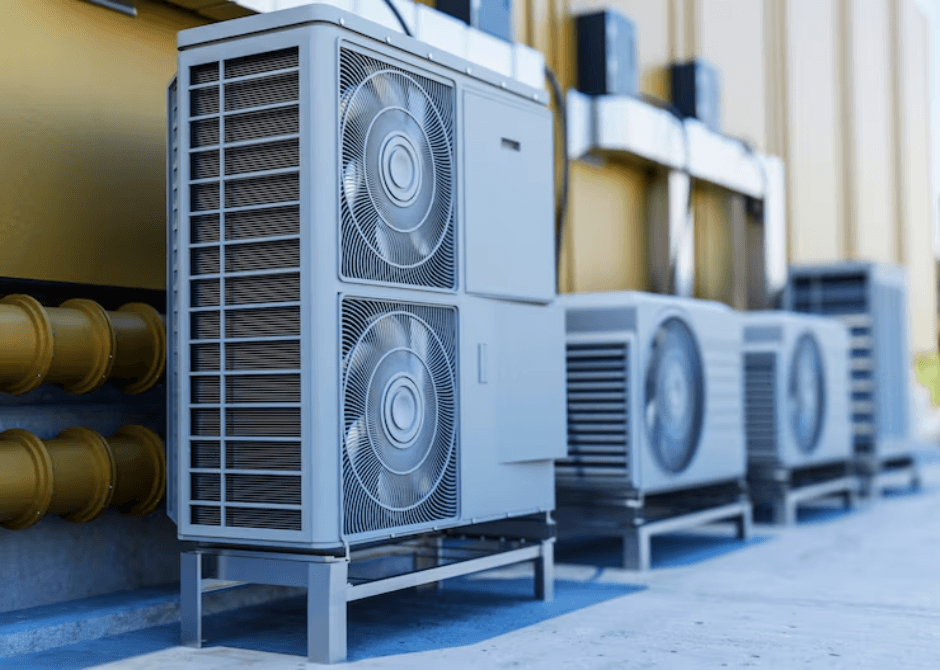
An air source heat pump typically produces a low hum or whir as its fan and compressor operate.
How noticeable this is can depend on several factors, including:
- The heat pump model
- The size of the unit
- Heating demand
- Distance from the unit
- Nearby buildings and walls
- The location of windows and doors
- The mounting surface
- Weather conditions
- The background noise around the property
A unit positioned several metres from the house may be barely noticeable, while one installed close to a bedroom or living room window may be more apparent.
This is why careful positioning is an important part of heat pump installation.
Are Air Source Heat Pumps Noisy at Night?
Another common concern is whether a heat pump will disturb you or your neighbours during the night.
Air source heat pumps can operate overnight, particularly during colder periods when the property requires heating or hot water. However, a properly designed and installed system should not automatically create a significant noise problem.
If you are particularly concerned about nighttime noise, discuss this during the initial survey. The position of the outdoor unit can be planned to minimise its impact on bedrooms and other quiet areas.
Are Heat Pumps Noisier Than Gas Boilers?
Air source heat pumps are not necessarily noisier than conventional gas boilers.
A gas boiler can produce around 50–60 dB when firing, which is within a similar general range to many heat pumps.
The difference is largely related to where the equipment is installed. Boilers are generally located inside the property, whereas an air source heat pump has an outdoor unit.
This means you may initially be more aware of the sound from a heat pump simply because it is outside.
UK Heat Pump Noise Regulations
Noise is an important consideration when installing an air source heat pump under Permitted Development rules.
For qualifying installations in England, the relevant requirements include a 42 dB(A) sound pressure limit at one metre from the nearest neighbouring property’s habitable-room window.
This is particularly important for homes where properties are close together, such as terraced houses.
An appropriate noise assessment should therefore form part of the installation planning process.
Recent Changes to Heat Pump Planning Requirements
The rules surrounding air source heat pump installations have changed in recent years.
In May 2025, the previous one-metre property-boundary restriction under the relevant permitted development rules in England was removed. This provides greater flexibility when deciding where an outdoor unit can be positioned.
The applicable noise requirements remain an important consideration for installations carried out under permitted development.
From May 2026, the updated MCS 020 standard became the required certification framework for relevant permitted development installations. The updated approach uses a more rigorous method for assessing predicted noise levels.
As planning and certification requirements can change, homeowners should check the current rules that apply to their property before installation.
What Are the Quietest Air Source Heat Pumps?
Several modern air source heat pumps are designed with low operating noise in mind.
Published specifications for some residential models include sound pressure figures in the mid-30s to mid-40s dB range, depending on the model and measurement conditions.
However, choosing the quietest heat pump isn’t simply a matter of selecting the product with the lowest advertised number.
The acoustic performance of the complete installation also depends on:
- The size of the heat pump
- Its operating load
- Positioning
- Distance from windows
- Mounting method
- Surrounding structures
- Installation quality
If noise is an important consideration, ask your installer for the acoustic specifications of the specific model being recommended and clarify whether the figures refer to sound power or sound pressure.
How to Reduce Air Source Heat Pump Noise
There are several ways to minimise the perceived noise from an air source heat pump.
Choose the Right Location
The position of the outdoor unit can make a significant difference.
Where practical, avoid placing the unit immediately outside frequently used bedroom or living room windows. The position of neighbouring windows should also be considered.
Use Anti-Vibration Mounts
Vibration can contribute to unwanted noise.
Suitable anti-vibration mounts can help reduce vibration being transferred through the mounting surface, walls or other parts of the property.
Avoid Poorly Positioned Reflective Surfaces
Hard surfaces can reflect sound, potentially making a heat pump appear louder.
The orientation and location of the unit should therefore be considered as part of the overall installation design.
Consider Acoustic Screening
Acoustic screening may be appropriate in certain situations, but it needs to be carefully designed.
A heat pump requires sufficient airflow to operate correctly, so screening should not obstruct the fan or restrict ventilation.
Choose the Correctly Sized System
Correct sizing is important for both efficiency and performance.
An appropriately sized heat pump should be selected based on the property’s heating requirements and heat-loss assessment rather than simply choosing the largest available unit.
Why Is My Air Source Heat Pump Making a Noise?
Some heat pump noises are completely normal, while unusual or persistent sounds may require investigation.
Normal Heat Pump Sounds
Low humming or whirring:
Usually associated with normal fan and compressor operation.
Clicking when starting or stopping:
Some clicking can occur as the system starts or shuts down.
Occasional banging during cold weather:
During a defrost cycle, the system temporarily changes its operation to remove ice from the outdoor coil. This can produce a sudden change in sound and is not necessarily a sign of a fault.
Sounds That May Need Attention
Persistent buzzing:
This could be related to vibration, loose fixings or panels.
Rattling:
Debris or a loose component may be responsible.
High-pitched screeching:
An unusual persistent high-frequency noise should be professionally checked.
Suddenly louder operation:
If a heat pump becomes noticeably louder than usual, it is worth arranging an inspection.
If you are unsure about a noise, contact a suitably qualified professional rather than attempting to repair mechanical, electrical or refrigerant components yourself.
Can You Install an Air Source Heat Pump in a Terraced House?
Yes, an air source heat pump can be installed at a terraced property.
However, close neighbouring properties mean that careful planning and positioning are particularly important.
Limited outdoor space can also make the location of the unit more challenging. An installer should consider the available space, nearby windows, property layout, acoustic requirements and applicable planning rules before confirming the installation position.
Are Air Source Heat Pumps Suitable for UK Homes?
Air source heat pumps can be suitable for a wide range of UK properties, but every home is different.
Before installing one, it is important to consider:
- The property’s heat loss
- Insulation levels
- Existing heating system
- Radiators or underfloor heating
- Hot water requirements
- Available outdoor space
- Electrical requirements
- Planning considerations
- Noise and positioning
- Overall heating demand
A professional assessment can help establish whether an air source heat pump is suitable and what size and type of system may be appropriate.
How Can You Make a Heat Pump Installation Quieter?
If minimising noise is a priority, address the issue during the planning stage rather than after installation.
A good approach includes:
- Compare the acoustic specifications of suitable heat pumps.
- Check whether the figures are sound power or sound pressure.
- Identify bedroom and living room windows.
- Consider neighbouring properties and windows.
- Select an appropriate installation position.
- Make sure the system is correctly sized.
- Consider suitable anti-vibration measures.
- Ensure acoustic screening does not restrict airflow.
- Complete the relevant noise assessment and certification requirements.
Taking these steps early can help prevent avoidable noise problems later.
The Bottom Line: Are Air Source Heat Pumps Noisy?
So, are air source heat pumps noisy?
Modern systems are generally designed to operate at relatively low noise levels, with many residential units producing around 40–55 dB during normal operation.
However, the noise you actually experience will depend on much more than the specification sheet. The model, system size, operating conditions, installation position, mounting method and distance from windows can all affect perceived noise.
The key points to remember are:
- Modern air source heat pumps are generally relatively quiet.
- Sound power and sound pressure are different measurements.
- Correct positioning can significantly reduce perceived noise.
- Anti-vibration measures can help reduce unwanted vibration.
- Correct system sizing is important.
- Noise requirements should be considered before installation.
- Unusual or persistent noises should be professionally investigated.
- Planning and certification requirements should be checked for your specific property.
For homeowners considering an air source heat pump, noise doesn’t necessarily need to be a barrier. With appropriate equipment selection, careful positioning and professional installation, a heat pump can provide an effective heating solution without becoming an intrusive source of background noise.
Frequently Asked Questions About Air Source Heat Pump Noise
How loud is an air source heat pump?
Most modern air source heat pumps operate at approximately 40–60 dB at one metre, with many residential systems operating around the 45–55 dB range during normal conditions.
Do air source heat pumps make noise all the time?
Heat pumps can operate for extended periods, particularly during colder weather, but their output and noise level can vary depending on heating demand and operating conditions.
Can I hear an air source heat pump inside my house?
In most cases, noise inside the property should be limited when the unit is properly installed. However, a unit positioned directly outside a window may be more noticeable, particularly when the window is open.
Can my neighbour complain about heat pump noise?
A neighbour can raise a noise concern with the relevant local authority. Meeting the applicable planning and acoustic requirements can help demonstrate that an installation complies with the relevant rules.
What is the quietest air source heat pump?
Several modern models have relatively low published noise figures. However, the quietest choice for an individual property depends on the model, system size, installation position and the acoustic measurement being used.
Why does my heat pump make a loud noise in cold weather?
A sudden change in sound can occur during the automatic defrost cycle. However, persistent banging or other unusual noises should be checked by a qualified professional.
Can an air source heat pump be installed near a bedroom?
It may be possible, but positioning should be carefully assessed. Where practical, placing the outdoor unit away from bedroom windows can help reduce perceived noise.
Are air source heat pumps suitable for terraced houses?
They can be suitable for terraced properties, although limited space and close neighbouring homes make careful positioning, noise assessment and installation planning particularly important.